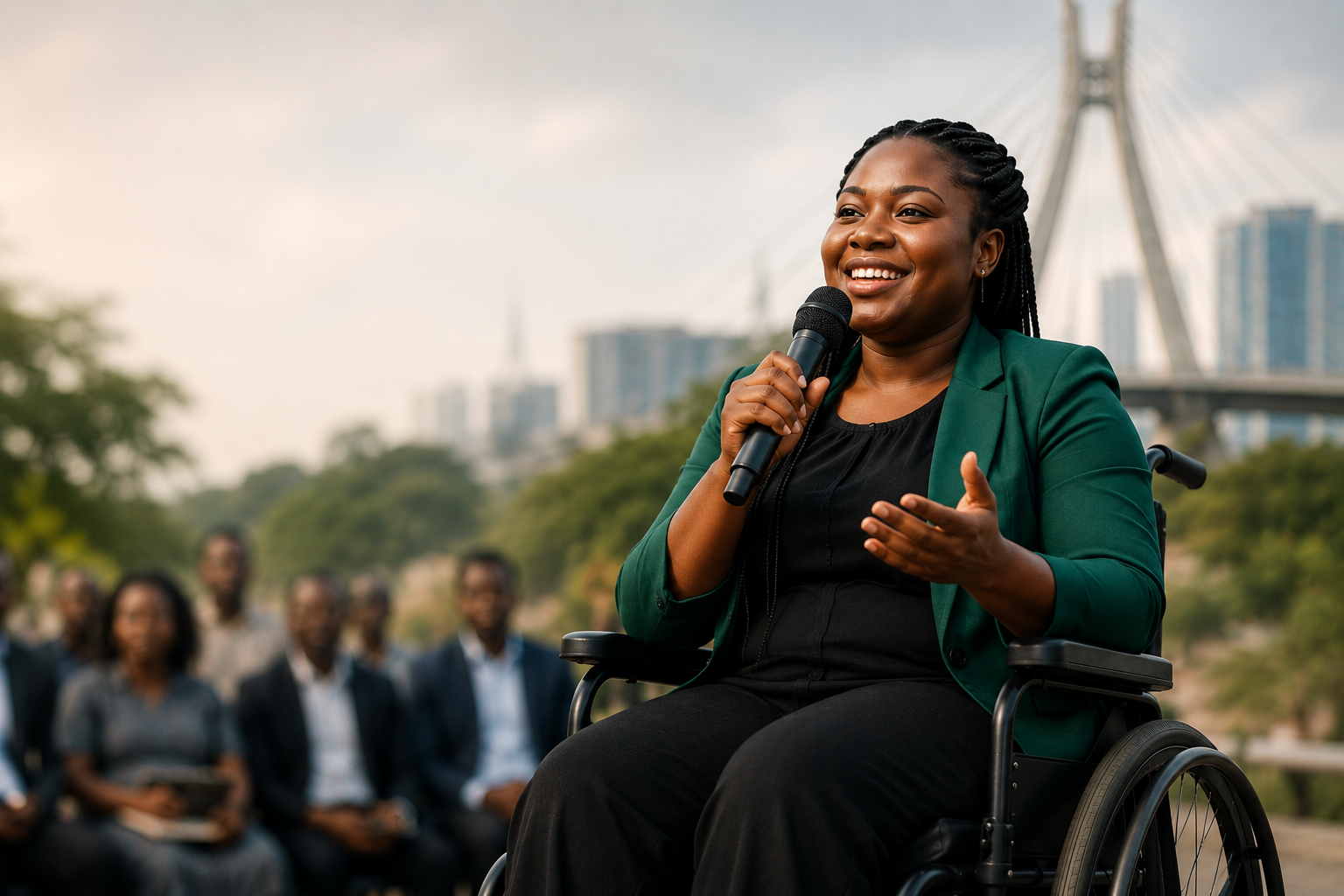
Disability Rights in Nigeria are fundamental human rights that ensure equal opportunities, accessibility, dignity, and inclusion for persons with disabilities. Despite legal protections and growing awareness, many Nigerians with disabilities still face barriers in education, employment, healthcare, transportation, and public life.
Why Disability Rights in Nigeria Matter
Disability rights are human rights. It is that simple.
Yet many Nigerians living with disabilities still face barriers every day. Some struggle to enter public buildings because there are no ramps. Others find it difficult to board buses, access healthcare, secure employment, or receive quality education.
These experiences are not merely unfair. They often amount to exclusion and unnecessary barriers. Across Nigeria, millions of Persons with Disabilities (PWDs) contribute to their families, businesses, schools, religious centers, and communities. They are entrepreneurs, students, civil servants, artisans, teachers, and professionals. They deserve equal opportunities.
This guide explains the rights available under Nigerian law, what those rights mean in practical terms, and how citizens and advocates can help build a more inclusive society.
Understanding Disability Rights in Nigeria
Disability is not only about a physical condition. A person may have difficulty in seeing, hearing, walking, speaking, learning, or performing certain daily activities. Some disabilities are visible, while some are not.
The important point is this: disability does not reduce a person’s worth, dignity, intelligence, or potential. The challenge often comes from society itself.
When a building has only stairs, a wheelchair user faces a barrier. When examination materials are unavailable in accessible formats, disabled students face exclusion. When employers make assumptions, opportunities disappear.
In many Nigerian cities, daily life can be difficult for Persons with Disabilities (PWDs). Busy motor parks, overcrowded Danfos, poorly designed walkways, inaccessible public toilets, and buildings without ramps can turn ordinary activities into exhausting tasks.
That is why disability rights exist. They help remove barriers and promote equal participation in the society.
The Legal Foundation of Disability Rights in Nigeria
The Nigerian government made a significant step forward with the enactment of the Discrimination Against Persons with Disabilities (Prohibition) Act, 2018.
Before the enactment of the Act, Nigeria lacked a comprehensive federal law specifically protecting the rights of persons with disabilities. While the Constitution prohibits certain forms of discrimination like ethnicity, religion, or sex, disability was not explicitly covered, leaving significant gaps in legal protection.
What the Act really does is to make it a criminal offence to treat someone unfairly because of their disability, whether that’s in hiring, education, healthcare, or simply accessing public spaces. The Act provides penalties for certain forms of discrimination and also allows affected individuals to seek legal remedies through the courts.
So, there’s both a criminal and civil route for accountability, which gives the law more teeth than just a statement of good intentions.
It seeks to reduce discrimination and improve accessibility in public life. The law recognizes that inclusion is not a favor. It is a right.
Rights Every Person with Disability Should Know
1. Right to Education
Every child deserves access to quality education, one of the most powerful tools for breaking the cycle of poverty.
Students with disabilities have the right to learn without discrimination. Both governments and schools should make reasonable efforts to create inclusive and conducive learning environments where students can participate fully.
Education opens doors. Without it, exclusion becomes harder to break.
2. Right to Employment
Many qualified Nigerians with disabilities still face employment discrimination.
The law protects the right to work. Employers should focus on skills, qualifications, and performance rather than stereotypes.
A disability does not erase talent. It never has. Accessibility is also a key to inclusion.
3. Right to Accessibility
Accessibility affects nearly every part of life. Public buildings, offices, hospitals, schools, transport facilities, and other public spaces should be designed in ways that allow Persons with Disabilities (PWDs) to access services safely and independently.
Imagine visiting a federal ministry for an official assignment, and discovering that the only entrance required is climbing several flights of stairs. That is frustration, not an inclusion.
Accessibility ensures everyone can participate regardless.
4. Right to Healthcare
Access to healthcare is a fundamental human right.
Persons with Disabilities (PWDs) should be able to receive medical care without discrimination, unnecessary obstacles, or unfair treatment.
Healthcare facilities should strive to provide services that accommodate different needs. The government should also provide a modern healthcare system for their citizens because health is another form of wealth.
5. Right to Political Participation
Democracy works best when every citizen has an equal opportunity to participate.
Persons with Disabilities (PWDs) have the right to vote, without being disenfranchised, contest elections, attend political meetings, and participate in public affairs.
Their perspectives matter. Their votes count.
Accessibility and Inclusiveness in Daily Life
Laws are important. And daily experiences matter too.
Consider transportation in a busy mega city of Lagos, where a person with mobility challenges may find it difficult to enter certain buses because accessibility features are absent.
The same challenge can arise in commercial banks where entrances, counters, or service processes do not adequately accommodate different needs.
Government offices face similar issues. Some public buildings still lack ramps, elevators, clear signage, or accessible restrooms. These shortcomings create barriers that limit participation.
Inclusion is not charity, but a basic provision. When accessibility improves, everyone benefits. Elderly citizens, pregnant women, parents with young children, and persons recovering from injuries often benefit from the same improvements.
The Role of Citizens, Families, and Advocates
Creating an inclusive society is not the responsibility of the government alone.
Citizens have a role.
Families have a role.
Advocates have a role.
We can challenge harmful preconceptions when we hear them. We can support inclusive policies in schools, workplaces, religious institutions, and community organizations. We can even encourage businesses to improve accessibility and inclusiveness for all.
Small actions matter.
Awareness matters.
Respect matters.
Advocacy becomes stronger when communities understand that disability rights are not special privileges. They have equal rights. With a collective goal, we will create an inclusive environment.
Challenges Facing Disability Rights in Nigeria
Progress has been made, but challenges remain.
Many public facilities are still inaccessible for Persons with Disabilities (PWDs). Awareness of disability rights remains low in some communities. Employment discrimination continues.
Funding limitations affect implementation efforts. Rural areas often face even greater challenges than major cities.
The gap between law and practice is still visible. Closing that gap requires commitment from government institutions, private organizations, civil society groups, community leaders, and ordinary citizens.
Conclusion: Moving from Awareness to Action
Disability Rights in Nigeria are essential for building a fair, inclusive, and accessible society.
Nigeria has taken important steps through legislation, advocacy, and public awareness. Yet many citizens with disabilities still face barriers in schools, workplaces, hospitals, banks, transportation systems, and public spaces.
The journey is not finished. Each accessible building matters. Each inclusive classroom matters. Each fair employment decision matters.
When Persons with Disabilities (PWDs) can move freely, learn freely, work freely, vote freely, and participate fully in society, everyone benefits.
That is the goal. A Nigeria where disability never determines the limits of opportunity.